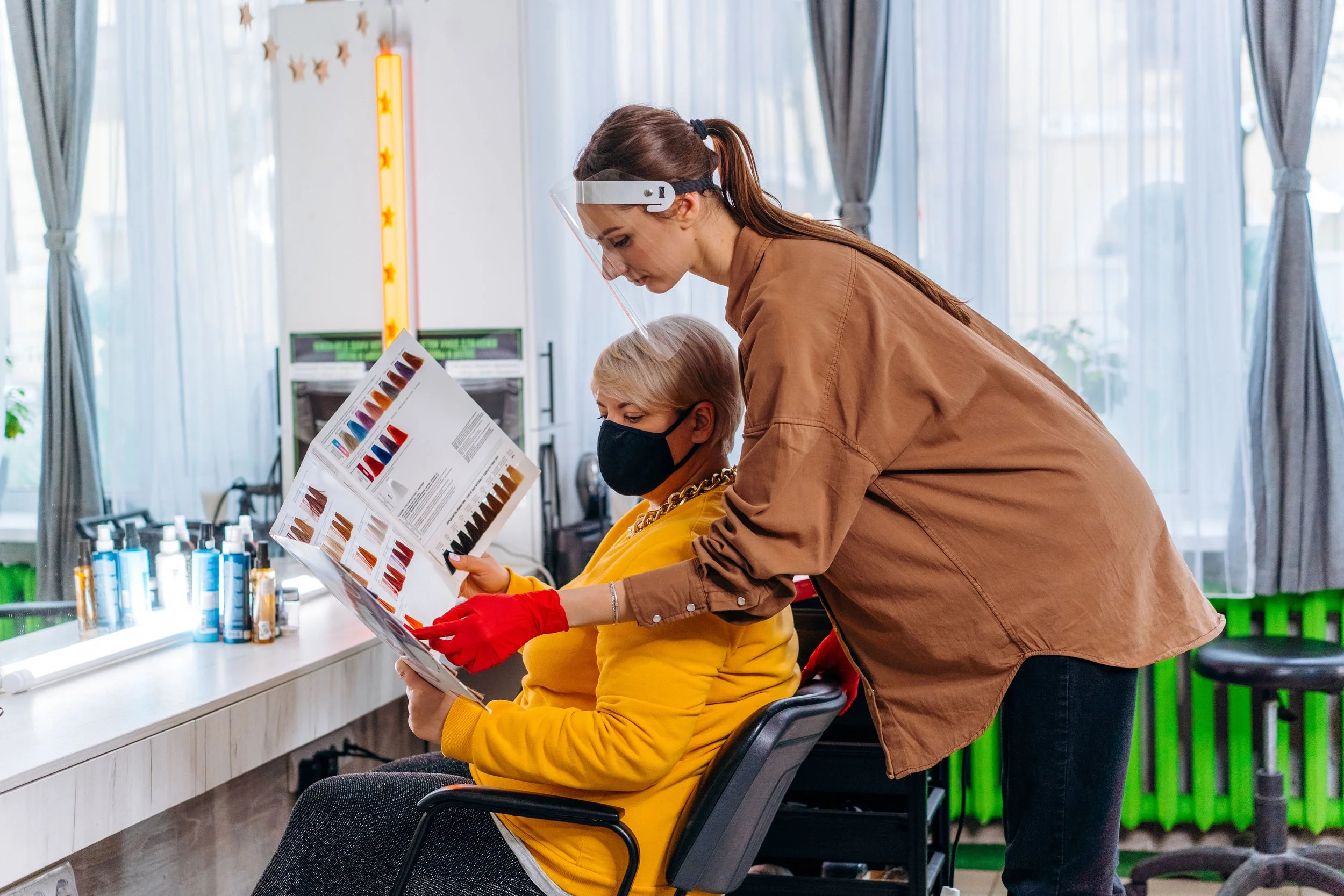
You book a routine haircut and spend the week thinking about it.
You save reference photos, rehearse how to explain what you want, and worry that the stylist will cut too much. In the chair, you may agree when you are uncertain because correcting someone feels awkward. When the appointment ends, you smile automatically even if the reflection feels unfamiliar.
Perhaps the haircut looks objectively fine and you still become tearful at home.
Hair is part of the body, but it is also connected to identity, culture, gender, memory, safety, attractiveness, age, health, and control. Changing it can feel much larger than changing a style.
An emotional reaction does not mean you are vain or unreasonable. It may mean that the appointment touched something important about how you recognize yourself and how other people see you.
Hair Helps Create a Recognizable Self
Most people do not examine every feature separately when they look in the mirror. They recognize an overall image.
Hair contributes strongly to that image. Its shape, texture, colour, length, movement, and usual placement help your face feel familiar. A significant change can produce a temporary mismatch between who you know yourself to be and what you see.
This is why a technically successful haircut can still feel wrong at first. Your reflection has changed faster than your internal picture of yourself.
The unfamiliarity may settle after several days, after you wash and style it yourself, or as the cut begins to grow. That adjustment period is not proof that the stylist failed. It also does not require you to pretend you like the result.
The Appointment Requires Trust With Your Body
A haircut involves allowing another person close physical access.
They stand behind you, touch your head and neck, move your face, use sharp tools near your skin, and make changes you cannot fully monitor. Once hair is cut, it cannot be immediately restored.
This can feel vulnerable even in a safe and professional salon. The cape restricts movement. Your glasses may be removed. Mirrors show some angles but not others. You may not know what a technique will look like until it is complete.
The relationship contains a small but meaningful transfer of control. You are relying on the stylist to understand your language, respect your limits, and check before making a larger change.
Past experiences of not being listened to can make that trust more difficult.
Consent Can Become Blurry in the Chair
You may know what you want before the appointment and become uncertain once someone offers a confident recommendation.
The stylist suggests more layers, a shorter length, thinning, bangs, or a different colour. You do not want to appear rigid or offend their expertise. You hear yourself agree before you have decided.
Some people freeze or become highly agreeable when another person is touching them. They notice discomfort but cannot organize a response quickly enough. Afterward, they blame themselves for not speaking.
Consent still matters in ordinary personal services. You can ask the stylist to pause, show the amount they plan to remove, explain a technique, or stop before continuing.
“I need a minute to look at this” is enough. So is “Please do not cut above this point.”
The aim is not to control every movement. It is to remain a participant in decisions about your body.
Sensory Input Can Make Haircuts Exhausting
Hair appointments involve layered sensory experiences.
There may be bright lighting, music, overlapping conversation, hair dryers, chemical scents, water temperature, tight capes, small hairs on the skin, combing, scalp pressure, and unexpected touch around the ears and neck.
For autistic people and others with sensory sensitivities, one or more of these may be painful or overwhelming rather than mildly unpleasant. ADHD can add difficulty with waiting, sitting still, tracking a long consultation, or tolerating a lengthy colour process.
Sensory needs vary. A person does not need a diagnosis to request a quieter time, breaks, reduced conversation, fragrance awareness, a dry cut, a different cape, or warning before touch.
Ask what the salon can accommodate. A supportive stylist may schedule the first appointment of the day, explain each step, allow headphones, or divide a longer service into stages.
Small Talk Can Become Another Demand
Some clients enjoy talking throughout an appointment. Others find it draining.
You may be trying to describe a visual preference, tolerate sensory input, monitor the cut, and respond socially at the same time. The pressure to be pleasant can make it harder to notice what is happening.
Silence does not have to mean dissatisfaction. You can say at the beginning, “I may be quiet today, but I will let you know if I need anything.” Some salons offer quiet appointments explicitly.
If conversation helps you relax, that is equally valid. The important point is that a service does not need to become a performance of sociability.
Hair Can Carry Gender and Identity
Hair is often used to communicate masculinity, femininity, androgyny, sexuality, cultural belonging, religion, age, profession, and subculture.
A haircut may affirm identity by helping the outside feel more aligned with the inside. It can also intensify dysphoria or disconnection when the result is interpreted through a gendered lens you did not want.
Someone may ask for short hair and receive a style the stylist assumes is more feminine. Another person may want length without being treated as less masculine. A trans or nonbinary client may need a stylist who listens without turning the appointment into an interrogation about identity.
The emotional stakes are not superficial. Being seen accurately can affect comfort, safety, and belonging.
You deserve language that reflects your goal. Reference photos from people with similar hair texture can help, but the stylist should still ask what you like about the image rather than making assumptions.
Culture and Hair Cannot Be Separated
Hair can carry cultural knowledge, racial identity, family practice, resistance, spirituality, and experiences of discrimination.
Texture is not a minor technical detail. A stylist who lacks training with curls, coils, locs, braids, coverings, or culturally specific practices may misunderstand the hair and the meaning attached to it. Past pressure to straighten, conceal, cut, or make hair more acceptable can make a salon emotionally loaded.
Some people learned hair care through intimate family rituals. A parent, grandparent, sibling, or community member washed, braided, oiled, or cut their hair. A change may therefore connect with belonging and memory as well as appearance.
Seeking a stylist with relevant skill is not being demanding. Competence affects both the result and the safety of the experience.
Body Image Can Become More Visible
A salon mirror can be difficult because you remain in front of it for a long time.
Your usual styling, lighting, and angles are removed. Wet hair changes the shape around the face. The cape hides the body and may make the head feel visually unfamiliar. You may focus on features you usually avoid examining.
If you struggle with body image, ageing, weight changes, scarring, hair loss, or self-criticism, the appointment can intensify monitoring. You may assume the haircut has revealed a flaw when the broader experience is making you unusually self-conscious.
Try not to make a global decision about your appearance during the most unfamiliar stage. Evaluate the cut after you are home, regulated, and able to style it in a way that feels like you.
This is not about denying dissatisfaction. It gives you a fairer context in which to assess it.
Hair Loss Changes the Meaning of a Cut
A haircut can become emotional during illness, hormonal change, stress, pregnancy, postpartum recovery, ageing, medication changes, or treatment that affects hair growth.
The appointment may make thinning, breakage, or texture change harder to avoid. Cutting damaged or sparse hair can bring relief and grief at the same time.
Hair loss can have many causes. A stylist may notice changes, but they cannot diagnose the reason. Sudden, patchy, painful, scarring, or otherwise concerning hair loss deserves assessment by an appropriate healthcare professional.
Therapy can support the emotional impact of bodily change. It does not replace medical evaluation.
A Haircut Can Mark a Transition
People often change their hair after a breakup, loss, birth, graduation, illness, career change, or period of feeling stuck.
The change creates a visible boundary between chapters. It may express agency when other parts of life feel outside your control.
This can be meaningful. It can also create pressure for the haircut to produce an internal transformation. You expect to feel free, confident, mature, renewed, or more like yourself. When the emotional shift does not arrive, disappointment can attach to the hair.
A haircut can symbolize change without completing the deeper work of that change. The symbol still matters, but it does not have to carry the entire transition.
Criticism About Hair Can Remain for Years
Hair is often commented on publicly.
You may have been teased for texture, colour, thickness, hair loss, facial hair, a childhood cut, or a style associated with your identity. Caregivers may have controlled length or treated hair as a source of conflict. School or workplace rules may have communicated that your natural hair was unprofessional or unacceptable.
A new haircut can reactivate those judgments. You anticipate other people’s opinions before you have formed your own.
If someone criticizes the result, their preference is not an objective measurement of you. You can say, “I am still getting used to it, and I do not want feedback on my appearance.”
You are allowed to experience the change before making it public property.
The Pressure to Say You Love It Can Create Shame
At the end, the stylist turns the chair and asks what you think.
This is a difficult moment for many people. You may need time to process, but an immediate reaction is expected. The stylist invested skill and effort, and you do not want to hurt them.
If something is clearly different from what you discussed, naming it promptly gives the stylist the best opportunity to assess what can be adjusted. Be specific rather than apologizing for your entire reaction: “The front is shorter than I expected. Can we talk about the options?”
If you are simply uncertain, you can say, “This is a big change, so I need to see it at home before I know how I feel.”
Honesty does not require cruelty. Gratitude for the person’s work and dissatisfaction with an aspect of the result can coexist.
A Bad Haircut Can Affect Daily Life
People sometimes dismiss haircut distress because hair grows.
Growth is real, but it takes time. During that time, you may see the result in every mirror, photograph, video meeting, and social interaction. Styling may take more effort. You may feel less recognizable or worry about upcoming events.
Allowing disappointment does not make the haircut catastrophic. It helps you respond practically.
Ask whether a correction is possible and whether another stylist should perform it. Avoid repeated urgent changes that could cause more damage. Explore temporary styling, accessories, protective styles, or a consultation before deciding on the next step.
If the reaction becomes all-consuming, notice whether the haircut has attached to broader body-image distress, shame, or fear of being seen.
Preparing Can Increase Choice
Before booking, look for evidence that the stylist works with your texture, length, identity, and desired technique. A consultation can be useful for a major change.
Bring a few images and identify the specific feature you want from each one. “I like the length at the sides” is clearer than expecting the entire photo to translate to different hair.
Also name what you do not want. Show the shortest acceptable point. Ask how the cut will behave when air-dried, tied back, or left without styling.
If you have sensory or communication needs, share them in advance when possible. Decide on a pause phrase. Keep glasses on during the consultation if you need them to see.
Preparation cannot guarantee a perfect result. It can make your preferences more available when anxiety rises.
How Counselling Can Help
Counselling can help when haircut distress connects with identity, body image, sensory overwhelm, loss of control, gender, culture, trauma, or major life transitions.
Somatic and body-aware therapy can help you notice when you become activated or agreeable while someone is touching you. Relational work can explore why stating a preference feels dangerous or unkind. Trauma-informed therapy can support greater choice when personal care settings activate memories of coercion, ridicule, or ignored boundaries.
Therapy may also help separate dissatisfaction with one haircut from global conclusions about your appearance or worth. If hair loss or bodily change is involved, counselling can make room for grief without demanding immediate acceptance.
The goal is not to make appearance unimportant. It is to help you relate to change with more agency, context, and care.
Counselling for Identity, Body Image, and Anxiety in Surrey
Tidal Trauma Centre offers in-person counselling at our Cloverdale office in Surrey, easily accessible from Langley, Delta, and White Rock. Online therapy is available across British Columbia, including Vancouver, Victoria, Kelowna, Prince George, and rural communities.
Our registered clinical counsellors support adults and youth navigating identity, gender and sexuality, anxiety, shame, body image, sensory overwhelm, self-doubt, trauma, and major life transitions.
You Are Allowed to Recognize Yourself
If changes to your hair bring up anxiety, shame, grief, identity concerns, or a loss of control, counselling can help you understand why the experience feels so significant. Caring about how you inhabit and recognize your body is not trivial.
Tidal Trauma Centre offers in-person trauma-informed counselling at our Cloverdale, Surrey office and online therapy across British Columbia.
Contact us or fill out a New Client Form to be matched with one or more of our therapists. If you are ready, book a free consult or appointment.
-
The change may create unfamiliarity, disappointment, sensory exhaustion, loss of control, or a strong feeling about identity and how you are seen. Tears can arrive after you leave because the social demand of the appointment has ended.
Give yourself time to regulate and see the cut in your own environment. If something needs correction, contact the salon once you can describe the concern specifically.
-
Yes. Bright lights, dryers, scents, capes, water, touch near the face and ears, small hairs on the skin, conversation, and an unpredictable sequence can create significant sensory demand.
Possible accommodations include a quieter time, written notes, reduced conversation, warnings before touch, breaks, headphones, or dividing a long service into shorter appointments.
-
Name the specific difference between what you discussed and what you see. For example, “I expected the length to remain below my chin, and it is shorter. Can we discuss what is possible now?”
Avoid personal attacks, but do not hide the concern to protect the stylist from all disappointment. Ask before agreeing to further cutting.
-
The question arrives in a socially exposed moment. You may feel responsible for the stylist’s feelings, need more processing time, or default to agreement when another person has physical access to you.
Prepare a neutral response: “Thank you. This is a big change, so I want to see how it feels after I style it.”
-
It can. Hair is often read through gendered expectations, and a cut may either support recognition or intensify a sense of being misread. The impact depends on the person and context.
A stylist who listens to the actual shape and presentation you want, rather than assigning a gendered version of it, can make the experience safer.
-
There is no required waiting period. If the cut is clearly different from what was agreed, contact the salon promptly because correction policies may have timelines.
If the main issue is unfamiliarity, one or two washes and styling it yourself may provide more information. Waiting briefly does not invalidate your first reaction.
-
Seek medical guidance for sudden, patchy, painful, scarring, rapidly worsening, or otherwise concerning hair loss, or when it occurs with other health changes. Many physical conditions and medications can affect hair.
A counsellor can support the emotional impact, but diagnosis and treatment of hair loss require an appropriate healthcare professional.
You Might Also Be Interested In:
Blogs
You’re Not Faking It: How Therapy Can Help with Imposter Syndrome and Self-Doubt
Life Transitions and Therapy: How Counselling Can Support You Through Change
Overstimulation and Emotional Flooding: A Nervous System Lens on ADHD
Is It Fear or Boundaries? How to Tell What Your Body Is Saying
Services
Disclaimer: The content on this website is for informational purposes only and does not constitute medical, psychological, or mental health advice. It is not a substitute for professional care. Always consult a qualified healthcare provider for diagnosis and treatment.