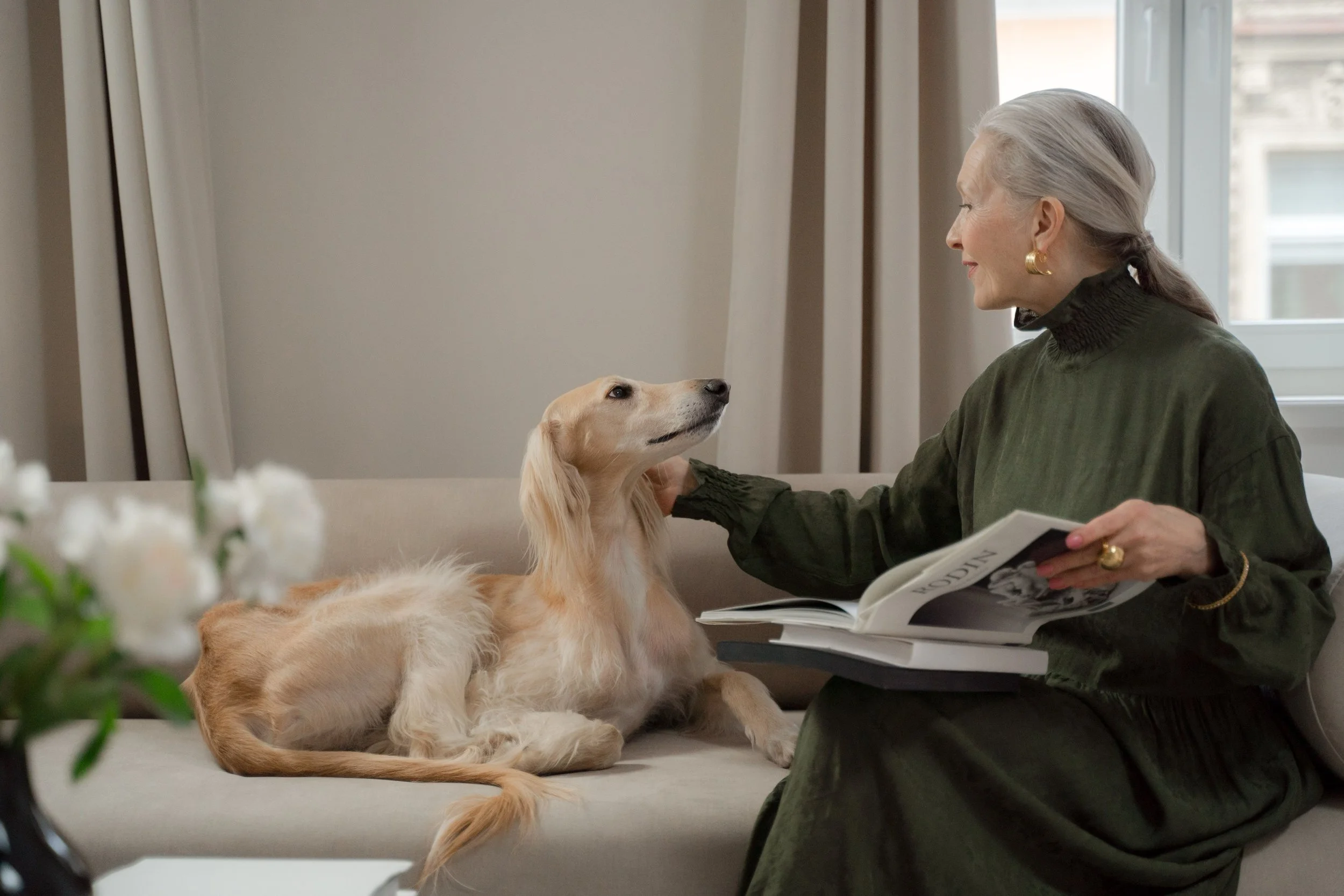
The house can feel wrong before you fully understand why.
There is no sound of paws when you open the door. No food bowl to fill. No animal waiting beside the bed, following you into the kitchen, or taking up the familiar place on the couch.
You may still listen for them. You may wake up and briefly forget what happened. Your body continues moving through a routine that no longer has anywhere to go.
When a pet dies, goes missing, or can no longer remain in your care, the loss can be profound. An animal may have been part of your daily life for years. They may have been beside you through illness, separation, isolation, recovery, moves, new relationships, or major changes in identity.
Yet people sometimes respond to pet loss as though it should be easier than other forms of grief. You may be expected to return to work quickly, stop mentioning the loss, or consider getting another animal before you have begun understanding what this one meant.
Pet loss grief deserves more than “it was only a pet.” The relationship was real, the routines were real, and the absence is real.
Pets Become Part of the Structure of Daily Life
Many important relationships are experienced in conversation. The relationship with a pet is often experienced through repetition, presence, touch, movement, and routine.
Your pet may have been the first being you spoke to in the morning and the last one you checked on at night. Walks organized the day. Feeding times interrupted work. Medication schedules, grooming, play, litter boxes, and veterinary appointments became ordinary parts of life.
These tasks required time and responsibility, but they also created rhythm. A dog got you out of the house when you did not want to see anyone. A cat sat near you while you worked. A rabbit, bird, reptile, or other animal had particular sounds and habits that made the home feel inhabited.
When the pet is gone, you do not only lose companionship. You lose the structure built around caring for them.
This is why grief may arrive during small moments rather than only when you consciously think about the death. You reach for the leash. You avoid dropping food because you remember there is no one waiting for it. You wake at the time they needed medication. You automatically leave space for them on the bed.
The ordinary nature of these moments can make the loss feel constant. There are reminders in every room.
The Human-Animal Bond Can Be an Attachment Relationship
People form meaningful attachment relationships with animals. A pet may represent safety, predictability, affection, responsibility, and belonging.
For some people, the relationship feels simpler than many human relationships. The animal does not require an explanation for why you are quiet. They do not need you to hide anxiety, grief, disability, or exhaustion. Their presence can be steady when other parts of life feel unstable.
This can be especially important for someone who lives alone, works from home, has limited mobility, is socially isolated, or has difficulty trusting people. The pet may be woven into how the person regulates emotion and moves through the day.
The depth of grief is influenced by the meaning of the bond, not by whether the relationship involved another human. Research on animal-companion loss has found that grief can affect emotional well-being, daily functioning, identity, and social connection. Studies also emphasize that the response varies. There is no single correct level of grief based on the animal’s species, size, age, or how long they lived with you.
A person may be deeply affected by the death of a pet they had for six months. Another may experience grief that changes over time after caring for an animal for seventeen years. The bond cannot be measured from the outside.
Pet Loss Is Often a Form of Disenfranchised Grief
Disenfranchised grief is grief that is not fully recognized, understood, or supported by other people.
After a human death, there may be familiar rituals, bereavement leave, meals from friends, and a general expectation that grief will affect daily life. Pet loss may receive a sympathetic message and then disappear from conversation.
Someone may ask when you will get another pet. A coworker may seem confused that you need time away. A family member may compare your grief with another loss and imply that you are reacting too strongly.
Research on companion-animal bereavement has described the wide-ranging impact pet loss can have, while other research identifies pet bereavement as a form of disenfranchised grief that may leave people without adequate social support.
When grief is minimized, people often begin minimizing it themselves. You may stop talking about the pet, hide how often you cry, or feel embarrassed that the loss continues to affect you.
The lack of recognition can become a second loss. You are missing the animal while also missing the understanding you hoped to receive from other people.
The Home Can Feel Empty in a Very Physical Way
A pet occupies space differently from a human companion. They move through the home at floor level, appear in doorways, make small sounds, and create patterns of physical contact.
After the loss, silence can feel unusually loud. The home may seem larger or less alive. Some people cannot bear to move the bed, toys, enclosure, or bowls. Others need to remove everything immediately because the reminders feel unbearable.
Neither response is more loving. Objects can provide comfort and pain at the same time.
You may continue expecting to see your pet out of the corner of your eye. A shadow, sound, or movement in the blankets may briefly feel like them. This does not necessarily mean anything is wrong. Your brain has spent months or years predicting their presence in familiar places.
The body also notices the loss of touch. You may miss the weight of a cat on your lap, the pressure of a dog leaning against you, the feeling of holding a small animal, or the routine of grooming them. If physical contact with the pet helped you settle, sleep, or feel less alone, their absence may be experienced throughout your body.
Grief is not only a thought about someone who is gone. It can be the repeated physical experience of expecting a presence that no longer arrives.
Euthanasia Can Bring Grief and Responsibility Together
Choosing euthanasia can be one of the most painful responsibilities involved in caring for an animal.
You may have made the decision because your pet was suffering, losing mobility, unable to eat, struggling to breathe, or no longer experiencing a reasonable quality of life. Even when a veterinarian supported the decision, you may replay it repeatedly.
Was it too soon? Did I wait too long? Were they frightened? Did they know I was there? What if one more treatment would have helped?
The mind often searches for certainty after a decision that could never provide perfect certainty. Animals cannot explain their experience or tell us exactly when they are ready. Caregivers must interpret behaviour, medical information, pain, function, and quality of life while emotionally attached to the outcome.
Guilt may appear because you authorized the death. That feeling can exist even when euthanasia was an act intended to prevent further suffering.
It may help to distinguish responsibility from wrongdoing. You were responsible for making a decision because your pet could not make it. Responsibility can be painful without meaning the decision was cruel.
Some people feel relief after euthanasia, especially after a long period of illness, vigilance, disrupted sleep, or intensive care. Relief does not mean you wanted your pet gone. It may mean the suffering and constant fear have ended. Relief and grief can exist together.
Sudden or Traumatic Pet Loss Can Leave Different Questions
Not every pet loss follows a gradual illness. An animal may die in an accident, escape, be injured by another animal, experience a medical emergency, or decline much faster than expected.
Sudden loss can leave the mind searching for the moment when the outcome could have changed. You may replay your last interaction, blame yourself for a decision that seemed ordinary at the time, or feel haunted by what you saw.
If the death was graphic or frightening, memories of the event may compete with memories of the animal’s life. You may avoid the location where it happened, experience intrusive images, or feel responsible for preventing something you did not know was coming.
Trauma-informed counselling can help separate the circumstances of the death from the larger relationship. The goal is not to erase what happened. It is to reduce the extent to which the final event takes over every memory of the pet.
When a pet is missing and their fate is unknown, grief may feel suspended. You may continue searching, checking shelters, posting online, or listening for familiar sounds. There may be no clear point when hope should end or mourning should begin.
This ambiguous loss can be especially difficult because there is no confirmed ending. Support should not force someone to choose between hope and grief before they are ready.
Rehoming or Losing Access to a Pet Can Also Create Grief
Pet loss is not limited to death.
Someone may need to rehome an animal because of housing loss, financial hardship, illness, disability, unsafe behaviour, allergies, a family crisis, or needs they can no longer meet. A pet may remain with a former partner after a separation. A housing provider, family member, or change in care needs may make continued contact impossible.
These losses can carry intense shame because the person believes they should have found another solution. Other people may judge the decision without understanding the circumstances.
Rehoming can be both compassionate and devastating. Recognizing that another home may better meet an animal’s needs does not remove the attachment or grief.
There may also be less social permission to mourn because the animal is still alive. Someone may say, “At least they are safe,” as though safety removes the loss of daily contact.
You can be grateful that the pet is cared for and still grieve that you are no longer the person caring for them.
People in the Same Household May Grieve Differently
One person may want to talk about the pet constantly while another becomes quiet. Someone may remove the pet’s belongings immediately, while another experiences that as unbearable. One family member may want another animal quickly, and another may feel that even discussing it is disloyal.
Differences in grief do not necessarily reflect differences in love.
The person who provided most of the daily care may experience the largest disruption in routine. Someone who was present during euthanasia may carry images or guilt that other family members do not. A child may move in and out of grief quickly, asking direct questions one moment and playing normally the next.
Conflict can arise when each person assumes their response is the correct one. The family may need room for different timelines and forms of remembrance.
Children benefit from language that is honest, clear, and appropriate for their age. Euphemisms such as “went to sleep” can create confusion or fear about sleep. It is usually better to explain that the animal died, that their body stopped working, and that they cannot return, while inviting questions and feelings without forcing a particular response.
The death of a pet may also be a child’s first direct experience of loss. Adults do not need to remove every painful feeling. They can offer steadiness, truth, and ways to remember the animal together.
Other Pets May Change After a Loss
Surviving animals may respond to changes in the home, routine, human behaviour, or the absence of another animal. They may search, vocalize, sleep differently, eat less, become more attached, or appear unchanged.
It can be tempting to interpret every behaviour as grief. Changes may also have medical, environmental, or routine-related causes. If another pet stops eating, becomes lethargic, or shows significant behavioural changes, consult a veterinarian rather than assuming the cause is emotional.
Caring for a surviving pet can be comforting and complicated. Their presence may intensify the absence of the animal who died. You may feel guilty for enjoying them or worry that your bond with them is different.
There is no need to make the relationships equal. Each animal occupies a different place in the household and in your life.
Remembering a Pet Does Not Prevent Healing
Some people worry that keeping photographs, ashes, collars, paw prints, or other objects will keep them stuck. Others feel pressured to create a memorial before they know what they want.
Continuing bonds are the ways people maintain an internal or symbolic relationship after a loss. This might involve displaying a photograph, telling stories, visiting a favourite walking route, donating to an animal organization, planting something, or keeping a private ritual.
Research on continuing bonds after pet loss suggests that remembrance can be comforting, though it may also intensify grief when the loss remains unsupported or socially minimized. The question is not whether you should maintain a bond. It is whether the form of remembrance helps you carry the relationship while continuing to participate in life.
You do not need to remove every reminder to prove you are healing. You also do not need to keep every object to prove you loved your pet.
The relationship can remain meaningful without requiring the grief to feel exactly as intense forever.
Getting Another Pet Is Not Replacing the One Who Died
There is no correct timeline for bringing another animal into your life.
Some people need a long period without a pet. The responsibilities feel impossible, the loss is too recent, or the idea of another bond brings fear. Others find that the absence of an animal makes home feel unmanageable and decide to adopt relatively soon.
Neither choice proves how much the previous pet mattered.
A new animal will not recreate the same relationship. Their temperament, habits, needs, and way of connecting will be different. This can bring joy and grief at the same time. You may compare them, feel guilty when you bond, or become anxious about their health because you now understand how painful loss can be.
It can help to ask whether you have the practical and emotional capacity to care for the animal in front of you, not whether you have finished grieving perfectly.
Love for a new pet does not take anything away from the relationship that ended.
How Counselling Can Help With Pet Loss Grief
Counselling offers a place where the relationship does not need to be defended or translated into something more socially acceptable.
A therapist can help you process sadness, guilt, anger, relief, loneliness, or the disruption of daily life. If euthanasia was involved, counselling can help you examine the decision with more context and separate painful responsibility from automatic self-blame.
If the loss was sudden or traumatic, therapy may help with intrusive memories, avoidance, or the feeling that the final moments have taken over the entire relationship. Grief work can create room for memories of how the animal lived, not only how they died.
Counselling can also explore what the pet represented. They may have been connected to a former relationship, a stage of life, recovery from illness, a sense of home, or a version of yourself that now feels further away.
Therapy does not require you to stop talking about the pet, remove their belongings, or adopt another animal. The goal is not to reduce the relationship to a lesson or move you toward a predetermined form of closure.
It is to help you grieve in a way that honours the bond while supporting your ability to continue living alongside the loss.
Pet Loss and Grief Counselling in Surrey and Online Across British Columbia
Tidal Trauma Centre offers in-person counselling at our Cloverdale office in Surrey, easily accessible from Langley, Delta, and White Rock. Online therapy is also available across British Columbia, including Vancouver, Victoria, Kelowna, Prince George, and rural communities.
Our counsellors support adults, youth, and families navigating grief, loss, guilt, trauma, depression, life transitions, and changes in identity or routine.
You do not need to minimize the relationship before asking for support. The fact that your loved one was an animal does not make the grief unworthy of care.
Give Pet Loss the Space It Deserves
Losing a pet can change the rhythm of your home, your daily routines, and your sense of companionship. Counselling can help you process the grief, guilt, or traumatic circumstances of the loss without minimizing what the relationship meant. Tidal Trauma Centre offers in-person grief counselling at our Cloverdale, Surrey office and online therapy across British Columbia.
Contact us or fill out a New Client Form to be matched with one or more of our therapists. If you’re ready, book a free consult or appointment.
-
There is no universal timeline. The intensity and duration of grief may be influenced by the closeness of the bond, the pet’s role in daily life, the circumstances of the loss, other recent losses, available support, and whether you had time to prepare.
Grief often changes rather than ending on a particular date. You may function more easily while still feeling a strong reaction around anniversaries, familiar routines, veterinary clinics, or places associated with the animal.
Consider additional support if the grief is persistently affecting sleep, work, relationships, daily functioning, or your ability to care for yourself. You do not need to wait until the reaction becomes severe before speaking with a counsellor.
-
Grief does not follow a ranking system. A pet may have been part of your daily life in a way that some people were not. They may have provided consistent companionship, physical closeness, routine, emotional safety, and a sense of being needed.
The loss can also be present throughout the home. There are fewer breaks from reminders because the relationship was built into ordinary routines. If other people minimize the grief, the lack of support may make it even harder to process.
Feeling deeply affected by pet loss does not mean you value human relationships less. It reflects the meaning and structure of this particular bond.
-
Begin by remembering the context in which the decision was made. What was your pet’s health, comfort, mobility, appetite, breathing, pain, or quality of life? What information did the veterinarian provide? What were you trying to prevent?
It is common to search for perfect certainty after euthanasia, but these decisions are usually made under painful and imperfect conditions. Feeling responsible does not prove you acted wrongly. You were asked to make a decision your pet could not make for themselves.
If guilt is taking over your memories of the relationship, counselling can help you examine the decision more fully and make room for grief without treating every unanswered question as evidence against you.
-
There is no required waiting period. Some people need time without caregiving responsibilities. Others feel ready sooner and find meaning in welcoming another animal.
Consider whether you have the practical capacity for the animal’s financial, medical, behavioural, and daily needs. Notice whether you expect the new pet to behave like the one who died or remove your grief. A new relationship will be different and may bring both happiness and reminders of the loss.
Adopting another pet does not replace the one who died. Waiting does not prove greater loyalty. The decision should fit your circumstances rather than someone else’s idea of what grief should look like.
-
Yes. Therapy can provide recognition and support for a loss that other people may not fully understand. A counsellor can help with sadness, loneliness, guilt, anger, traumatic memories, changes in routine, and the loss of identity or purpose that may follow.
Counselling may be especially helpful after euthanasia, a sudden death, a missing pet, forced rehoming, or a loss that reactivates earlier grief. The purpose is not to persuade you to move on quickly. It is to help you carry the relationship and the grief in a way that becomes more manageable over time.
You Might Also Be Interested In:
Blogs
When Grief Has No Timeline: Why Loss Doesn’t Move in Straight Lines
The Many Faces of Grief: How Loss Can Show Up Long After the Event
Living With Loss: How Therapy Supports Grief Without Rushing Healing
Services
Disclaimer: The content on this website is for informational purposes only and does not constitute medical, psychological, or mental health advice. It is not a substitute for professional care. Always consult a qualified healthcare provider for diagnosis and treatment.