Why Conflict Isn’t the Problem: What Couples Therapy Actually Works On
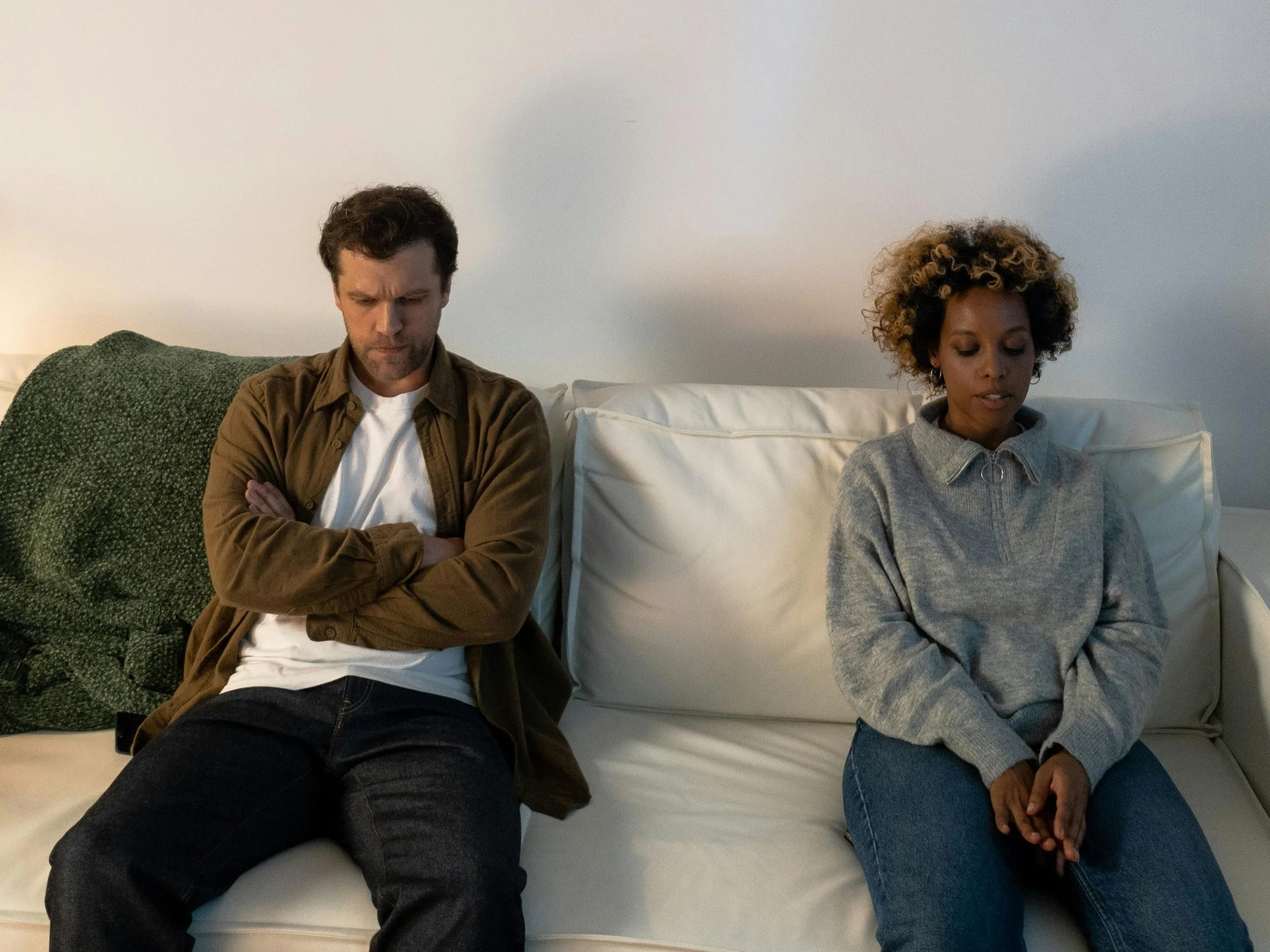
Many couples seek therapy because conflict feels constant, intense, or unresolved. Arguments escalate quickly, circle the same topics, or end in silence and distance. Over time, conflict can begin to feel like evidence that something is fundamentally wrong with the relationship.
What often surprises couples is that conflict itself is rarely the core issue.
In couples therapy, conflict is understood as a signal rather than a failure. The work is not about eliminating disagreement. It is about understanding what the conflict is organized around and why it keeps repeating.
Why Conflict Gets Blamed First
Conflict is loud and visible. It takes up emotional space and leaves a residue long after the argument ends.
Because of this, many couples focus on stopping fights, communicating more calmly, or avoiding certain topics altogether. Some learn scripts for fair fighting or rules for taking turns.
While these tools can help in the short term, they often do not address the deeper emotional dynamics that drive conflict in the first place.
What Conflict Often Looks Like Day to Day
For many couples, conflict follows familiar patterns.
A small comment turns into a larger argument. One partner pushes for resolution while the other shuts down or withdraws. The same fight repeats, but with different surface topics. Conversations end with one partner feeling unseen and the other feeling overwhelmed or criticized.
Sometimes conflict looks like emotional distance rather than arguing. Partners stop bringing things up because it feels safer to stay quiet than risk another rupture.
These patterns are not signs of failure. They are signals that something important is happening beneath the surface.
What Couples Are Actually Arguing About
Most recurring conflict is not really about the topic at hand.
Arguments about chores, money, intimacy, parenting, or time often reflect deeper emotional needs that feel unmet. One partner may be seeking reassurance, closeness, or responsiveness. The other may be seeking autonomy, safety, or relief from pressure.
When these needs are not recognized or expressed clearly, conflict becomes the language through which distress shows up.
The Role of Attachment in Conflict
From an attachment-based perspective, conflict is often a protest against disconnection.
When a relationship feels uncertain, emotionally unavailable, or unsafe, the nervous system responds. Some people escalate to be seen or heard. Others withdraw to protect themselves from overwhelm, criticism, or rejection.
Neither response is wrong. Both are attempts to preserve the bond in the only way the system knows how.
Couples therapy focuses on understanding these attachment-driven patterns rather than blaming either partner.
What Couples Therapy Actually Works On
Effective couples therapy does not focus primarily on stopping arguments.
Instead, therapy works on making the emotional cycle between partners visible. This includes understanding how each person’s reactions trigger the other and how both partners contribute to the pattern, often unintentionally.
Couples therapy also works on rebuilding emotional safety. When partners feel safer with each other, conflict naturally becomes less reactive and less threatening.
This is why couples therapy often looks slower and more relational than problem-solving approaches. The goal is not quick fixes. It is lasting change.
Why Communication Skills Alone Are Not Enough
Many couples already know how to communicate logically. They can explain their perspective clearly and articulate what they want.
What becomes difficult is staying emotionally connected when stress or vulnerability is present. When the nervous system perceives threat, access to communication skills decreases.
This is why couples can know what to do and still feel unable to do it in the moment. Couples therapy addresses this by working with emotional responses and nervous system patterns, not just communication strategies.
Emotional Risk and Why Conflict Feels So Intense
Conflict often involves emotional risk.
Partners may be risking rejection, abandonment, or being misunderstood. They may fear being seen as too much, not enough, or fundamentally unlovable.
When these fears are active, reactions become stronger and more protective. Couples therapy helps create enough safety that these risks can be acknowledged rather than acted out through conflict.
How Couples Therapy Supports Change
In couples counselling, the therapist helps slow interactions down and makes the underlying emotional process visible.
Partners learn to recognize what is happening inside themselves and between them during moments of conflict. Over time, this creates space for new responses.
Change happens not because couples stop disagreeing, but because they develop more capacity to stay present, responsive, and connected when disagreements arise.
When Conflict Starts to Feel Different
As therapy progresses, many couples notice that conflict feels less threatening.
Arguments may still happen, but they resolve more quickly. Repair becomes easier. There is less escalation and less emotional fallout.
Partners often report feeling more like a team again, even when they disagree. Conflict no longer defines the relationship.
Couples Counselling in Surrey and Cloverdale
At Tidal Trauma Centre, we offer Couples Counselling in Surrey using trauma-informed, attachment-based approaches. Therapy focuses on emotional safety, responsiveness, and understanding the patterns that shape your relationship.
Our Cloverdale Surrey office is easily accessible from Langley, Delta, and White Rock. Online couples counselling is also available across British Columbia.
When Conflict Has Taken Over the Relationship
If conflict feels like the defining feature of your relationship, couples therapy can help you understand what is happening beneath the arguments. Many couples seek therapy not to stop disagreeing, but to reconnect and respond to each other differently.
Contact us or fill out a New Client Form to be matched with one or more of our therapists. If you’re ready, book a free consult or appointment.
-
Not necessarily. Frequent conflict often reflects unmet emotional needs rather than incompatibility.
-
No. Couples therapy focuses on understanding and responsiveness, not agreement.
-
This is a very common pattern. Therapy helps partners understand how these responses interact and how to shift them together.
-
Yes. Emotional distance and conflict are often part of the same attachment cycle. Therapy addresses both.
You Might Also Be Interested In:
Blogs
Couples Counselling 101: What It Is, How It Helps, and When to Try It
Navigating Relationship Challenges: How Online Couples Therapy Can Support Real Change
You Don’t Have to Be in Crisis to Try Couples Therapy, Even Online
When Relationships Feel Hard: How Couples Counselling Can Help
Services
Disclaimer: The content on this website is for informational purposes only and does not constitute medical, psychological, or mental health advice. It is not a substitute for professional care. Always consult a qualified healthcare provider for diagnosis and treatment.