The Cost of Always Being the Calm One: Emotional Load in First Responders
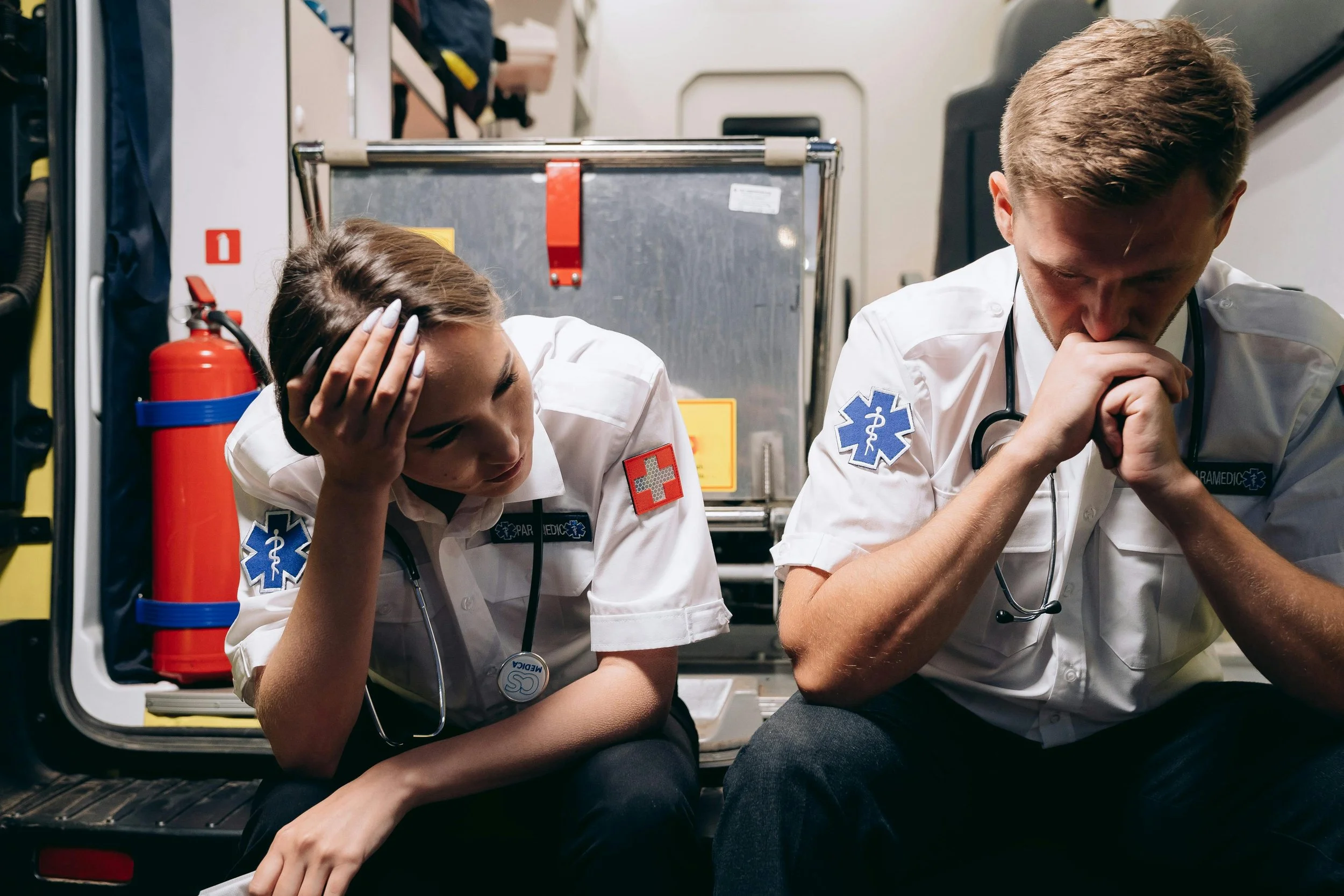
First responders are often known for their ability to stay calm under pressure. In emergencies, they steady situations, make rapid decisions, and carry responsibility when others cannot. This capacity is respected and relied upon.
Over time, however, always being the calm one comes at a cost.
Many first responders learn to manage their internal reactions quietly. Fear, sadness, frustration, and shock are contained in order to function effectively. Others lean on you. You absorb what unfolds. You keep moving.
This emotional load is rarely visible. But it accumulates.
What Emotional Load Looks Like in First Responder Work
Emotional load is the ongoing effort of holding your internal responses steady while managing high external demand.
For first responders, this often means being the person others vent to while never unloading yourself. It can mean staying composed during crisis and then feeling strangely empty afterward. You might notice discomfort when someone asks how you are doing, or irritation when people around you feel overwhelmed by things that seem minor in comparison.
Being the calm one is not simply a personality trait. It is a nervous system strategy shaped by training, responsibility, and repeated exposure to distress.
How Emotional Containment Becomes a Habit
In emergency environments, emotional containment is necessary. Strong reactions can interfere with safety, judgment, and coordination.
Over time, the nervous system learns to delay or suppress emotional responses in order to stay functional. This works on the job. The difficulty is that this containment does not always switch off afterward.
Many first responders notice that emotions surface later, indirectly. Irritability at home. Emotional numbness. Fatigue that does not resolve with rest. Snapping over small things after holding it together all day. Feeling more competent in crisis than in quiet moments.
These patterns are not signs of avoidance or emotional immaturity. They are adaptations.
The Hidden Effects of Carrying Emotional Load
Carrying emotional load over years can affect both physical and emotional well-being.
Some first responders experience chronic exhaustion, difficulty concentrating, or a sense of emotional flatness. Others feel constantly responsible for keeping things stable, even outside of work. Physical symptoms such as muscle tension, headaches, digestive issues, or disrupted sleep are common.
Relationships often feel the impact first. Partners or family members may experience emotional distance, impatience, or withdrawal. This can be confusing, especially when the first responder feels they are doing everything they can to stay composed and responsible.
Why Emotional Load Often Goes Unnoticed
Emotional load is easy to miss because it does not always look like distress.
Many first responders are high-functioning. They show up to work. They manage responsibility. They keep going. Because they are not falling apart, their internal experience often goes unrecognized by others and sometimes by themselves.
There is also cultural pressure within first responder roles to minimize emotional impact. Being reliable, steady, and unaffected is often praised. This can make it difficult to notice when emotional load has quietly become too heavy.
Emotional Load and the Nervous System
Holding emotions in check requires ongoing nervous system effort.
Some people stay in a state of controlled activation, always managing internal reactions. Others shift toward emotional shutdown, limiting access to feelings altogether. Both responses are protective. Neither allows for full recovery.
When emotional load remains unintegrated, the nervous system has fewer opportunities to reset. Over time, this can contribute to chronic stress, burnout, difficulty switching off after shifts, or a sense of disconnection from self and others.
How Therapy Supports Emotional Load Without Undermining Strength
Therapy for first responders does not aim to remove emotional control or reduce effectiveness. Emotional regulation is a skill, not a problem.
First responder–informed counselling respects the need for composure and works with pacing and nervous system capacity. Therapy does not require emotional unloading, forced vulnerability, or revisiting every incident.
Instead, therapy supports the nervous system in gradually releasing what has been held, in ways that feel manageable and contained. This allows emotional responses to move rather than remain locked in place.
Modalities such as somatic therapy, EMDR, Internal Family Systems, and Emotion-Focused Therapy help integrate emotional load over time. Many people notice increased emotional range, reduced irritability, improved sleep, and greater presence in relationships.
When Carrying It Alone Starts to Feel Heavy
Many first responders seek counselling not because they are in crisis, but because being the calm one for everyone else has become exhausting.
You may notice that you are always supporting others while your own needs stay unspoken. You may feel pressure to stay composed even when depleted. These experiences are common, and they are not signs of weakness.
They are signs that emotional load deserves care.
First Responders Counselling in Surrey and Cloverdale
At Tidal Trauma Centre, we offer First Responders Counselling in Surrey, designed specifically for the realities of emergency and frontline work. Many clients come in unsure whether their experience is serious enough to warrant support. Often, therapy helps simply by offering a space where composure is not required.
We provide in-person counselling at our Cloverdale Surrey office, easily accessible from Langley, Delta, and White Rock. Online therapy is also available across British Columbia.
When Being the Calm One Becomes Heavy
If you are used to holding things together for others and feel the weight of that responsibility, counselling can offer a place where you do not need to stay composed. Many first responders reach out not because they are falling apart, but because carrying everything alone has become too much.
Contact us or fill out a New Client Form to be matched with one or more of our therapists. If you’re ready, book a free consult or appointment.
-
No. Emotional load refers to the ongoing effort of managing internal responses. Burnout can develop when that load exceeds recovery capacity, but they are not the same.
-
Emotional containment can limit access to feelings over time. Numbness is often a protective nervous system response, not a lack of care or empathy.
-
Effective therapy supports integration, not loss of control. Many first responders find they feel more grounded and present, not less capable.
-
No. Emotional load often builds gradually. First responders counselling can be helpful even without a single defining event.
You Might Also Be Interested In:
Blogs
When Hypervigilance Becomes the Norm: Nervous System Adaptations in First Responders
Why First Responders Struggle to Fully Switch Off After Shift Work
When the Job Changes How You Relate: First Responders, Intimacy, and Emotional Distance
Services
Disclaimer: The content on this website is for informational purposes only and does not constitute medical, psychological, or mental health advice. It is not a substitute for professional care. Always consult a qualified healthcare provider for diagnosis and treatment.