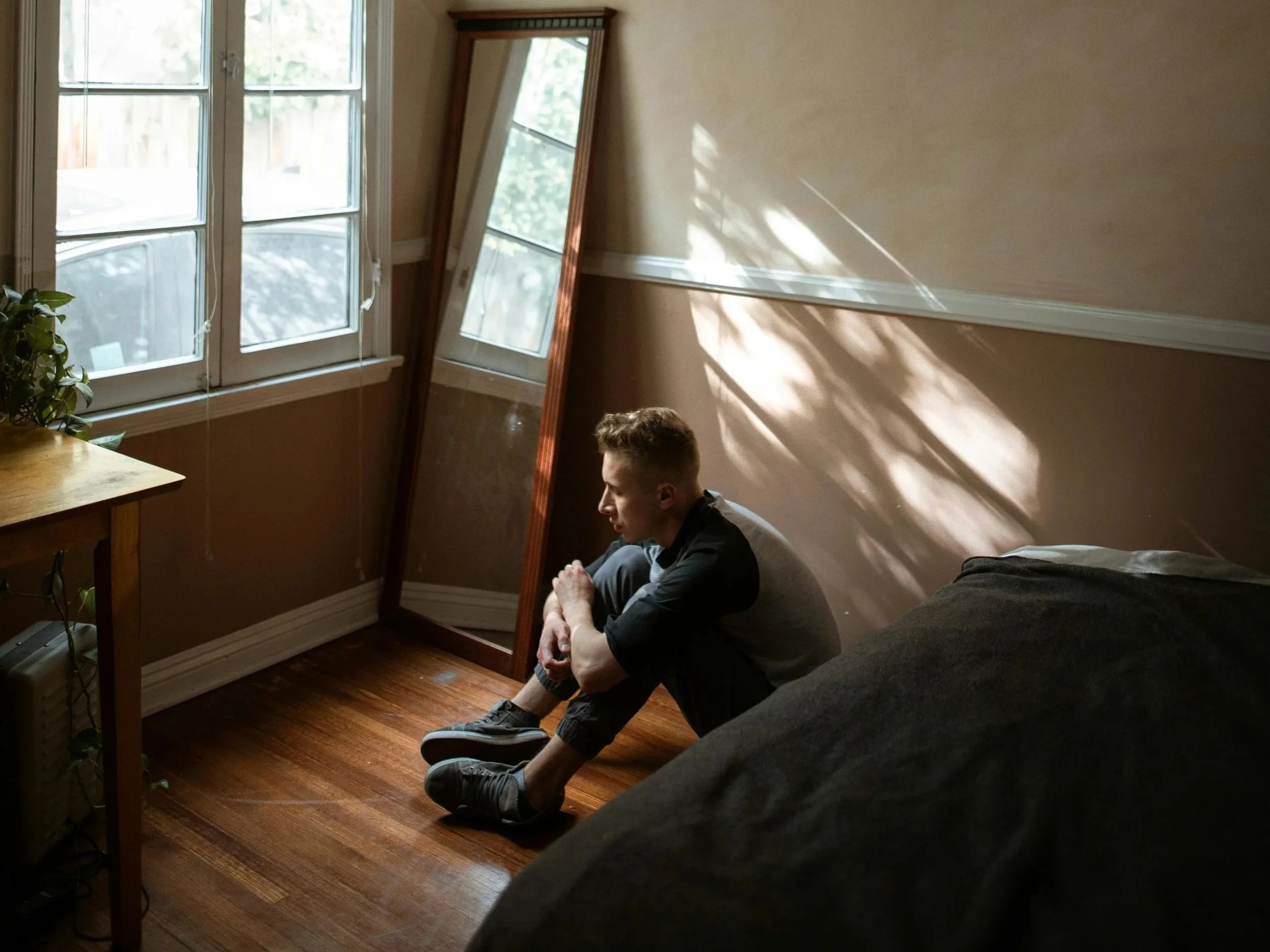
Many men come to therapy unsure of what to say. They may feel tense, exhausted, or disconnected, but when asked what’s wrong, the answer is often, “I’m fine,” or “Nothing specific.”
From the outside, life may look stable. Work is being handled. Responsibilities are met. Relationships appear functional. And yet something feels heavy or unresolved beneath the surface.
For many men, the challenge is not a lack of experience or depth. It is difficulty identifying and naming what is actually weighing on them.
How Emotional Silence Develops Over Time
From an early age, many men learn that emotional expression carries risk.
They may receive subtle or direct messages to stay composed, be logical, or handle things independently. Over time, attention shifts outward toward action and responsibility rather than inward reflection.
This does not mean emotions disappear. It means they are often felt as pressure, tension, or restlessness rather than named feelings.
What Stress Often Looks Like When It Goes Unspoken
When emotional strain is not articulated, it often shows up indirectly.
Many men notice increased irritability, difficulty sleeping, or feeling constantly on edge. Others describe emotional distance in relationships, low patience, or a sense of being shut down. Some stay perpetually busy because slowing down feels uncomfortable.
Because these experiences do not resemble sadness or anxiety in obvious ways, they are often minimized or ignored.
The Weight of Responsibility and Self-Reliance
Men are frequently expected to be dependable and steady.
Being the provider, the problem-solver, or the one others rely on can leave little room to acknowledge personal strain. Over time, responsibility becomes a reason to stay silent.
Many men worry that naming what they are carrying will burden others, create conflict, or expose weakness. Keeping things to themselves can feel like the safer option, even when it leads to isolation.
The Nervous System Holds What Words Do Not
Unspoken stress does not simply disappear.
The nervous system holds onto emotional load even when it is not consciously acknowledged. Over time, this can lead to chronic tension in the body, emotional numbness, or difficulty feeling connected to others.
Therapy helps men recognize how stress is showing up physically and relationally, often before it becomes overwhelming or disruptive.
Why Talking Can Feel Awkward or Pointless at First
Many men worry they will not know what to say in therapy.
This hesitation makes sense. If emotional language was never encouraged or modeled, talking can feel unnatural. Therapy does not require emotional fluency or insight from the start.
Often, sessions begin with practical concerns such as work stress, relationship strain, or feeling constantly on edge. Language develops gradually as safety increases.
How Therapy Creates Space Without Pressure
Therapy for men is not about forcing vulnerability or emotional disclosure.
It is about creating a space where reflection is allowed without judgment or urgency. Many men find that when pressure is removed, clarity begins to emerge naturally.
Therapy respects pacing and nervous system capacity, allowing insight to unfold rather than be demanded.
The Cost of Carrying Everything Alone
Silence often comes with a cost.
Many men experience loneliness even in close relationships. Some feel unseen or misunderstood without knowing how to explain why. Others notice growing resentment, emotional distance, or a loss of vitality.
These costs are rarely discussed, but they are often what bring men to therapy eventually.
What Often Changes When Men Begin to Speak
When men start naming what they are carrying, meaningful shifts often occur.
Emotional pressure eases. Relationships feel more connected. Decision-making becomes clearer. Energy and presence return in small but noticeable ways.
Speaking does not create weakness. It creates movement and relief.
Therapy for Men in Surrey and Cloverdale
At Tidal Trauma Centre, we offer Therapy for Men in Surrey using trauma-informed, relational approaches. Many men seek therapy because they are tired of holding everything alone and want space to understand what they are carrying.
Our Cloverdale Surrey office is easily accessible from Langley, Delta, and White Rock. Online therapy for men is also available across British Columbia.
When Silence Starts to Feel Heavy
If you have been carrying a lot without knowing how to talk about it, therapy can help create space to sort through what matters. You do not need the right words to begin.
Contact us or fill out a New Client Form to be matched with one or more of our therapists. If you’re ready, book a free consult or appointment.
-
Yes. Many men begin therapy unsure of what to say. Therapy helps clarify what feels heavy over time.
-
No. Therapy focuses on understanding stress, patterns, and experiences, not constant emotional expression.
-
Many men seek therapy before reaching a breaking point. You do not need to be in crisis to benefit.
-
This varies. Therapy moves at a pace that respects your comfort and capacity.
You Might Also Be Interested In:
Blogs
Why It’s Hard for Men to Ask for Help: Therapy and the Masculine Mask
Therapy Isn’t Just Talking: How Men Can Benefit from EMDR, Somatic, and IFS
What to Expect from a Male Therapist (And Why It’s Okay to Prefer One)
Services
Disclaimer: The content on this website is for informational purposes only and does not constitute medical, psychological, or mental health advice. It is not a substitute for professional care. Always consult a qualified healthcare provider for diagnosis and treatment.